
Wild herbs for coughs and colds
Have you seen this herb? Probably! Ground Ivy is a very common sight in woodlands and along the hedgerows, preferring damp and shaded ground.
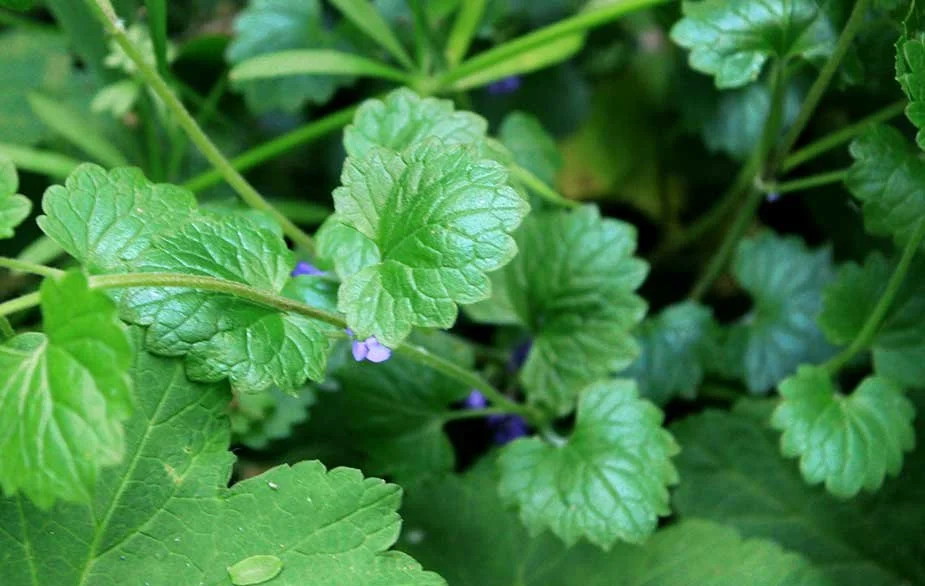
At this time of year (I’m writing this in January) when there are much fewer wild herbs available to gather, this hardy little plant still offers its leaves in the winter months.
Despite its name, Ground Ivy is in the Lamiaceae (Mint) family and is not related to English Ivy (Hedera helix). It also goes by “Cat’s Foot”, perhaps referring to its small paw-shaped leaves and “Ales Hoof”, as it was one of the popular herbs used in brewing before the introduction of Hops.
Rub the leaves and you’ll notice a distinct aroma. I’ve heard it likened to “Rosemary mixed with celery seed”, which is a fair description. The volatile oils responsible for its scent are anti-microbial, and the tannins and saponins in the leaves make them astringent, anti-catarrhal and expectorant — which basically means if you have congested sinuses or a phlegmy cough Ground Ivy is a great herb to have on hand.
Simply steep a few leaves in a mug of hot water for 15 minutes before drinking. Infused honeys are also a delicious way to take your medicine.
How to make Ground Ivy-infused honey
Fill a clear glass jar with clean fresh Ground Ivy leaves
You can also add chopped fresh Sage, Rosemary and even Garlic for their anti-bacterial and immune-supporting properties
Pour over a good quality runny honey
Stir with a chopstick to let out any air bubbles then top up with a bit more honey
Store in a cool dark place for 4-6 weeks, then strain.
Take a teaspoon directly or stir into tea as needed.
*Do not use Ground Ivy during pregnancy.